Circular Economy & Digital Product Passports: CEE December 2025 Insights
The UK’s transition to a circular economy is accelerating. Driven by regulation, consumer expectations, and the need for greater supply-chain transparency, businesses are being asked to rethink how products are designed, tracked, reused, and recycled.
At the Circular Economy Exchange (CEE) – December 2025, policymakers, academics, and industry leaders came together to explore how Digital Product Passports, QR codes, and interoperable data systems can support circular economy compliance in a post-Brexit UK.
This article summarises the key insights from the CEE white paper and outlines what happens next.
Why Digital Product Passports Are Critical to the UK Circular Economy
Digital Product Passports (DPPs) are rapidly becoming a cornerstone of circular economy policy. At their core, DPPs provide structured, verifiable access to product information, including materials, origin, safety, repairability, and recyclability.
For UK businesses, this matters on two levels. First, Digital Product Passports are increasingly embedded in EU regulations, meaning alignment is essential for continued market access. Second, DPPs offer a practical way to improve transparency, reduce compliance friction, and build trust with consumers.
However, the Exchange highlighted a critical challenge: without interoperable and scalable systems, Digital Product Passports risk becoming fragmented, costly, and difficult to manage. The consensus was clear, digital infrastructure must be standardised, secure, and accessible if DPPs are to deliver real circular economy benefits.
Circular Economy Compliance Must Work for SMEs
A recurring theme throughout the Circular Economy Exchange was the need to ensure that circular economy compliance does not disproportionately impact small and medium-sized enterprises (SMEs).
While large organisations may have the resources to absorb new regulatory requirements, SMEs often face higher relative costs when implementing data systems, certification processes, and reporting frameworks.
The white paper recommends a more inclusive approach, including:
- Tiered compliance requirements based on company size and turnover
- Shared digital infrastructure supported by larger brands
- Simplified data and verification processes
By lowering barriers to participation, policymakers and industry can ensure the circular economy drives innovation and growth rather than exclusion.
Circular Economy Beyond New Products: Why Existing Waste Matters
Much of the current conversation around Digital Product Passports focuses on future products entering the market. While this is important, the Exchange identified a major blind spot: existing waste streams.
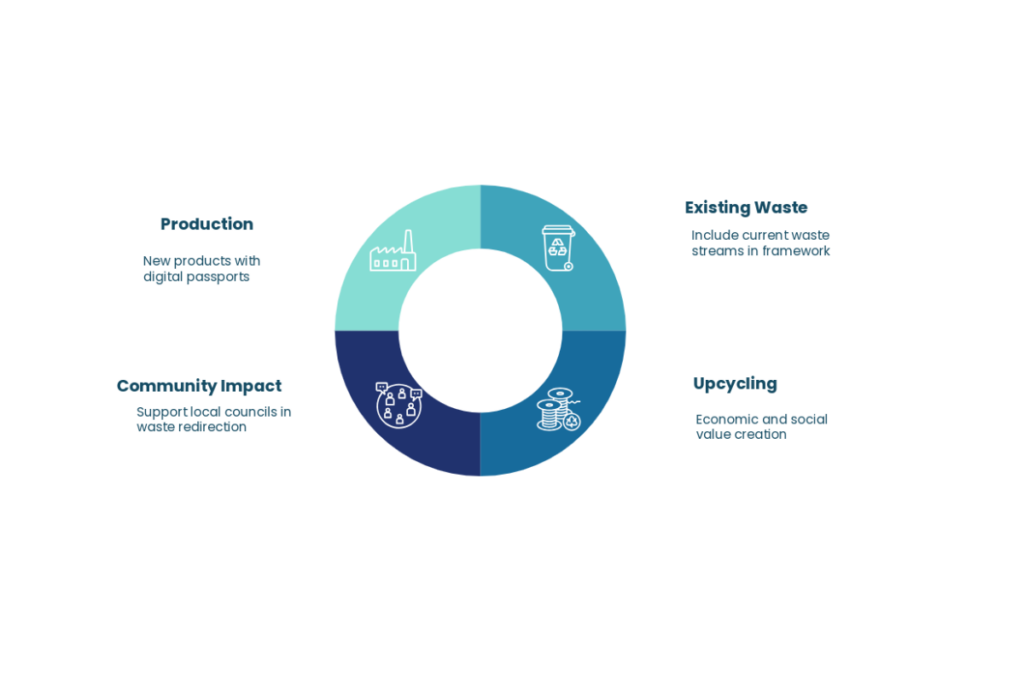
The circular economy cannot succeed if it only addresses what comes next. Vast quantities of materials are already in circulation — and currently treated as waste rather than economic assets.
Integrating existing waste streams into circular economy frameworks can:
- Support local authority waste management strategies
- Enable upcycling and reuse initiatives
- Unlock economic and social value from materials already in circulation
By legitimising recycling and upcycling activities through better data and traceability, circularity becomes a tool not just for environmental impact, but for regional development and community engagement.
Building Trust Through Product Transparency and Data Verification
Data alone does not create trust. One of the strongest messages from the Exchange was that trust is the missing infrastructure of the circular economy.
Consumers are increasingly sceptical of sustainability claims, particularly when information is inconsistent or difficult to verify. To address this, the white paper emphasises the importance of:
- QR codes as a universal access point for product information
- Verification by trusted third parties
- Standardised labelling and data frameworks
- Clear, accessible communication
When consumers can scan a product and immediately access reliable, verified information, transparency becomes practical and actionable — not abstract.
A Phased Roadmap for Circular Economy Implementation
Rather than attempting to implement everything at once, the Circular Economy Exchange recommends a phased approach to circular economy adoption.

Phase 1: Foundations
This initial phase focuses on establishing the basics:
- Universal product QR codes
- Minimum product data requirements
- Core digital infrastructure
Phase 2: Integration
Once foundations are in place, systems can be expanded to include:
- Automated supply-chain data sharing
- Integration of existing waste streams
- Enhanced consumer engagement tools
Phase 3: Long-Term Circularity
The final phase focuses on maturity and resilience:
- Continuous improvement
- Interoperable, future-proof systems
- Ongoing policy and industry collaboration
This staged approach allows businesses to build capability over time while maintaining momentum.
What’s Next for the Circular Economy Exchange?
The December 2025 white paper is not an endpoint but a starting one.
A follow-up Circular Economy Exchange session in January will build directly on these insights, focusing on how recommendations can move from policy discussion to practical implementation. This next phase will explore real-world application, collaboration, and pilot initiatives that turn circular economy ambition into action.
Final Thoughts: Turning Circular Economy Insight into Action
A successful circular economy depends on data, trust, and inclusion.
Digital Product Passports, supported by QR codes and standardised systems, offer a practical route to compliance while enabling transparency across supply chains and waste streams. When implemented inclusively and thoughtfully, they can unlock economic value, support SMEs, and build consumer confidence.
The foundations are being laid. The next step is action.
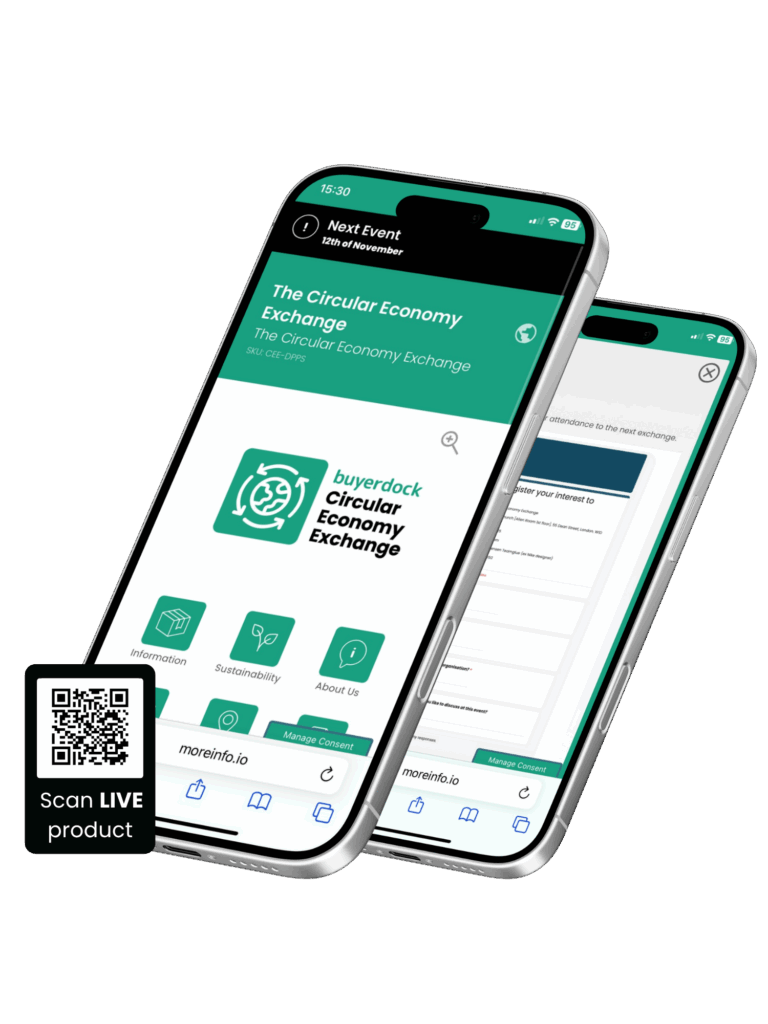
Next Event
Date: 14th January 2026
Time: 2:00pm- 4:00pm
Topic: A follow-up on the white paper
Location: St. Annes Church [Allen Room 1st floor], 55 Dean Street, London. W1D 6AF