Circular Economy Exchange: November Highlights
Our last roundtable in November gathered leaders across academia, industry, technology, retail and sustainability to shape the UK’s direction on Digital Product Passports (DPPs).
The aim was clear: design a simple, affordable, future-proof model that supports real businesses while helping the UK move confidently toward circularity.
This session forms a core part of the CEE’s upcoming 2026 White Paper for the UK government on Digital Product Passports (DPP), which sets out to position the UK alongside the EU — but with a more agile, accessible approach. Central to this work is defining a Minimum Viable Regulation (MVR) and Minimum Viable DPP (MVDPP) that companies of all sizes can adopt now, not years down the line.
The Call for a Simpler, Smarter Framework
A recurring theme was the risk of over-complex regulation. Many SMEs still work from spreadsheets; supply-chain data is patchy; and expectations remain unclear.
The group agreed the UK’s opportunity lies in a phased, interoperable model that:
- Keeps costs manageable
- Brings SMEs into compliance
- Aligns with GS1 and EU direction
- Builds consumer trust through clarity
- Supports reuse, repair and responsible disposal
The message was unanimous: start simple, then scale.
Behavioural Science: Make Circular Choices the Default
Professor Dennis Olsen underscored a key insight: people choose the easiest option. When reuse is “default”, uptake doubles. The same applies to repairs, take-back, and proper disposal. For DPPs to unlock these behaviours, they must be simple, mobile-friendly and standardised — free from brand gloss and built around clear signals consumers can trust.
Data, Trust and Traceability
With manufacturers often relying on self-declarations, the roundtable stressed the need for credible, scalable verification. Proposed elements for the white paper include director-signed ESG statements, staged traceability requirements, and GS1 Digital Link QR codes to unify scanning and data access across supply chains.
Fixing the Barriers to Circular Progress
The group also tackled systemic blockers — including the UK’s £135 de minimis threshold, which allows low-cost importers to avoid checks and undercut compliant UK brands.
Suggested solutions ranged from limiting the loophole to expanding EPR tiers to reward reuse and penalise waste.
What a UK “Minimum Viable DPP” Could Look Like
Phase 1:
A GS1-linked QR code with core product information and a concise ESG statement delivered through a simple digital label.
Phase 2 and beyond:
Gradual introduction of deeper sustainability and circularity data, including packaging details, recycled content, repair options and end-of-life guidance.
A phased model keeps businesses on board while raising ambition year by year.
Conclusion: Circularity Starts With Usable Data
The UK has a chance to shape a DPP model that is simple for micro-makers, scalable for global brands and fully aligned with EU direction. The roundtable made one thing clear: effective circularity won’t come from complexity — it will come from clear, accessible, consistent data.
What’s Next for the White Paper
Academics, industry stakeholders and standards bodies will now feed into evidence gathering, legal framing and case study development. The white paper is targeted for release between Easter and summer 2026, supported by continued input from the Circular Economy Exchange community.
To contribute to the next roundtable and follow the white paper’s development, join the CEE community.
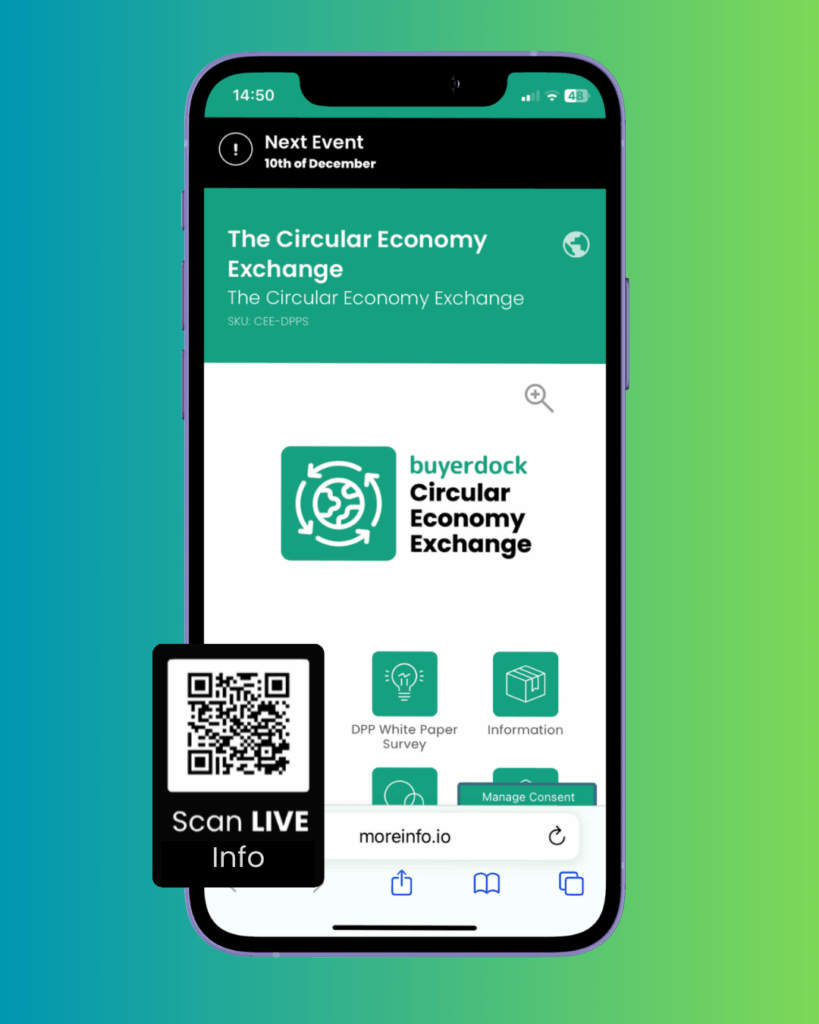
Next Event
Date: 10th December 2025
Time: 2:30pm- 4:00pm
Lead: Erik Jacobi
Topic: From Discussion to Delivery: Shaping the UK Digital Product Passport White Paper
To be part of the next phase of this work and contribute to the next exchange, we invite you to share your views through this short questionnaire.
RSVP here.