What the KitKat “Stolen Tracker” Reveals About the Future of Product Traceability
When news broke that over 400,000 KitKat bars had been stolen during transport across Europe, it sounded almost unbelievable.
Even more surprising was what came next – a public-facing “KitKat Tracker”, allowing consumers to check whether their chocolate bar was part of the stolen batch.
At first glance, it felt like an April Fool’s campaign. But it wasn’t.
It was something much more interesting.
A Real Problem Meets Consumer-Facing Traceability
The incident itself was real, a large-scale supply chain theft involving a shipment moving across borders.
Nestlé’s response?
A simple digital tool where consumers could input a code from their product and check its origin.
It’s a clever move:
- It builds trust
- It engages consumers
- It brings supply chain transparency into the public domain
But it also raises an important question…
Is This the Limit of Traceability Today?
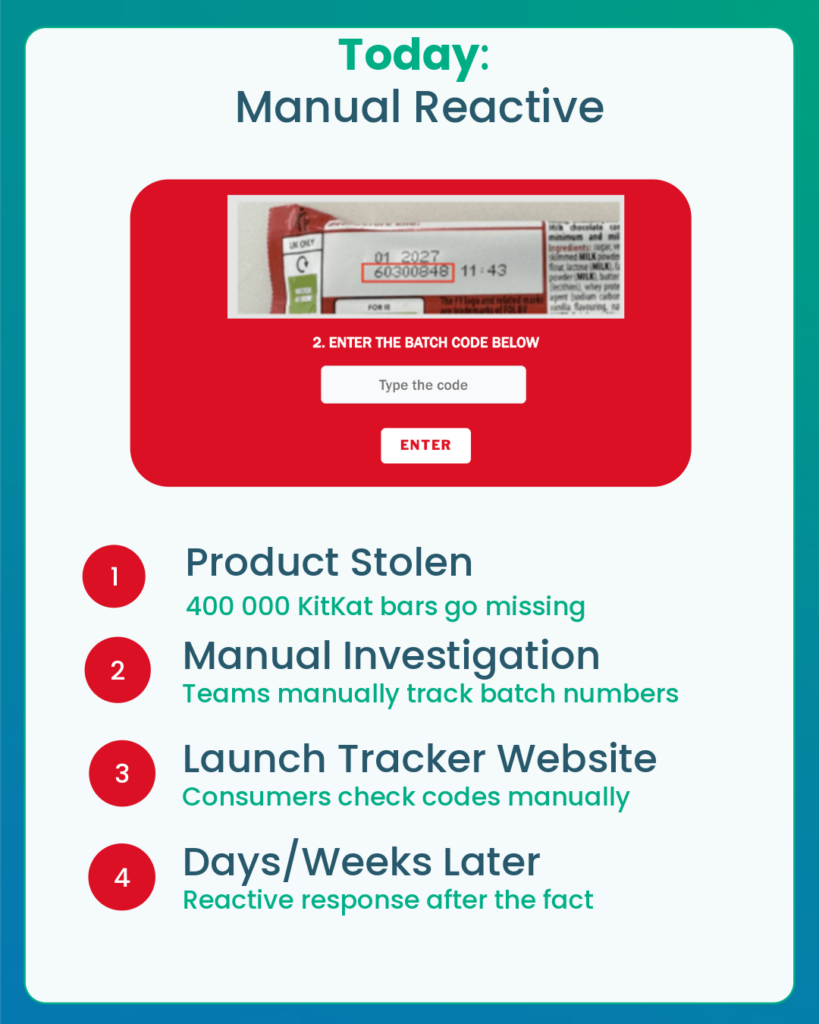
The KitKat tracker relies on a familiar system:
-> Batch codes
-> Central databases
-> Manual input
It works – but it’s not seamless.
Consumers have to:
- Locate the code
- Enter it manually
- Wait for a result
And for brands, it’s reactive – activated after something has gone wrong.
What If Products Could Tell You Instantly?
Now imagine a different scenario.
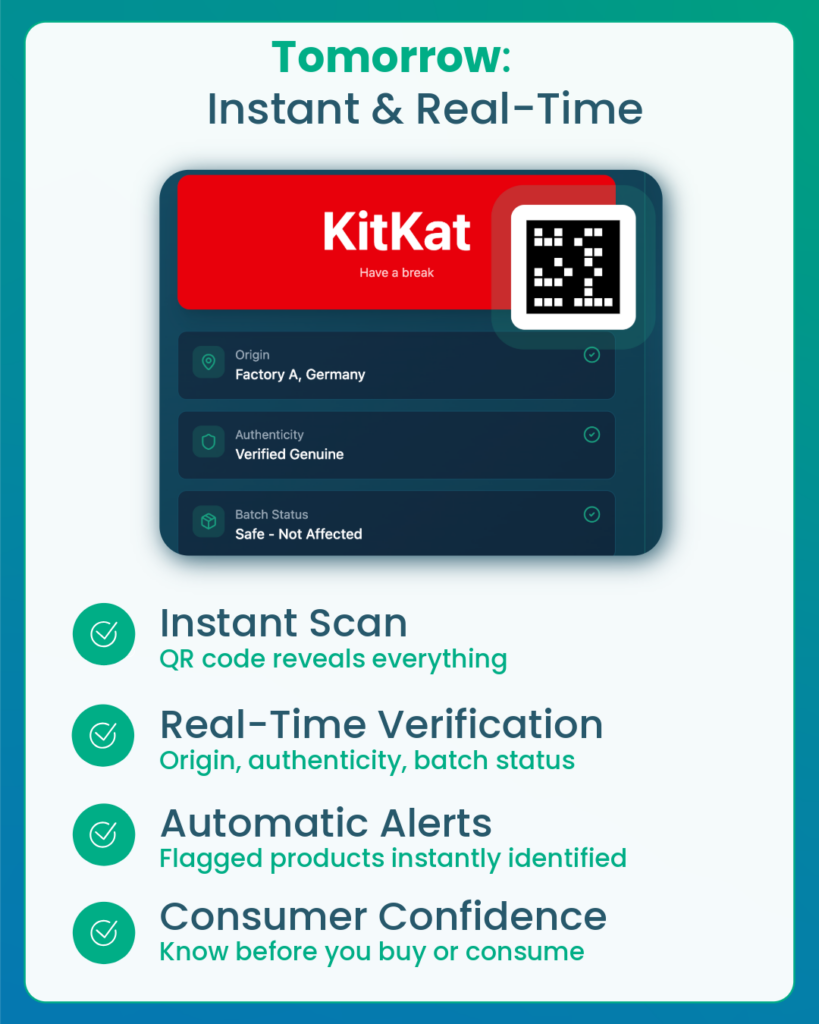
Instead of typing in a code, you simply scan the product.
Instantly, you see:
- Where it was produced
- Whether it’s authentic
- Whether it’s part of a flagged or recalled batch
No friction. No delay. No uncertainty.
This is where Digital Product Passports (DPPs) and technologies like iQRcode™/QR Barcodes take things further.
From Static Codes to Live Product Intelligence
What the KitKat campaign demonstrates is the potential of traceability.
What’s missing is the infrastructure to make it:
- Real-time
- Scannable at the point of interaction
- Connected across the entire supply chain
With a digital product identity/QR Barcode approach:
- Batch-level issues can be flagged instantly
- Consumers can access verified product data in seconds
- Brands can move from reactive to proactive transparency
A Glimpse Into the Future of Retail
As regulations evolve – particularly in areas like sustainability, compliance, and product safety – this level of transparency won’t just be a “nice to have.”
It will be expected.
The KitKat tracker may have started as a response to an unexpected event, but it offers a glimpse into a much bigger shift:
-> Products are no longer just physical items
-> They are becoming digital data carriers
The question isn’t whether traceability matters.
That’s already been answered.
The real question is:
How quickly can brands move from static systems to dynamic, connected product data?