Circular Economy Exchange: May Highlights
The May 2026 Circular Economy Exchange brought together people from fashion, sustainability, academia, supply chain, and technology to discuss a simple question: what makes a Digital Product Passport genuinely useful for businesses and consumers?
The Industry’s Biggest Challenge Is Data
One of the clearest themes throughout the session was that many brands are asking for “a DPP” before they’ve properly organised the data behind it.
That includes:
- supplier information
- material data
- sustainability reporting
- repair and care guidance
- recycling information
- provenance and traceability records
The consensus around the room was fairly straightforward: before businesses worry about advanced DPP experiences, they need clean, structured product data first.
As discussed during the roundtable, future regulations are increasingly overlapping, meaning the same product data may eventually feed into multiple areas of compliance – including:
In other words, DPPs are quickly becoming part of a much bigger digital product infrastructure conversation.
Consumers Don’t Want a Wall of Compliance Text
One of the most interesting parts of the discussion focused on what consumers actually want when they scan a product.
Spoiler: it’s probably not 17 tabs of regulatory information.
The group repeatedly came back to the idea that DPPs need to be genuinely useful in everyday life – especially for consumers, repairers, resale platforms, and recyclers.
That means:
- simple navigation
- visual layouts
- quick answers
- repair guidance
- care instructions
- recycling support
- product storytelling
Short videos, maps of origin, care advice, and resale support all generated strong interest during the session.
There was also a growing feeling that brands are underestimating the long-term value of post-purchase engagement. A DPP isn’t just a compliance layer – it could become one of the most important digital touchpoints a brand has after checkout.
Gen Z Already Behaves This Way
Research presented by students from the University of West London reinforced something many brands are already starting to notice: younger consumers are perfectly comfortable scanning QR codes – if the experience is quick and relevant.
The research showed that:
- tile-based layouts work best
- users want fast access to specific information
- storytelling builds trust
- visual experiences outperform dense text
Importantly, the students highlighted that consumers engage far more when they receive something useful in return – whether that’s care advice, provenance, rewards, or resale support.
That’s a very different mindset from treating DPPs as purely a legal obligation.
Physical Labels Are Becoming a Real Problem
Another strong talking point was the growing burden on physical labels and packaging.
Between multilingual requirements, care information, recycling instructions, and compliance obligations, labels are becoming increasingly crowded – particularly in fashion and apparel.
Some product categories barely have room for labels at all.
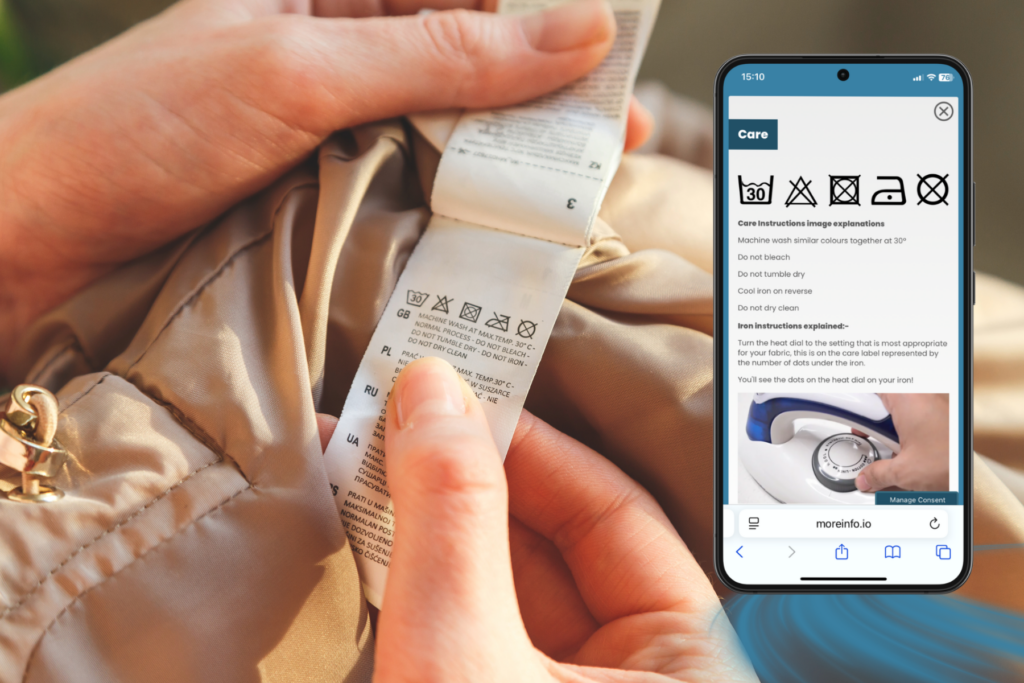
The session explored how digital product experiences could gradually reduce that pressure by shifting certain information into dynamic digital formats instead of static printed content.
And with intelligent QR codes expected to increasingly replace traditional barcode infrastructure from 2027 onwards, this shift is already beginning.
Resale Could Be One of the Biggest Opportunities
One area that sparked a lot of discussion was resale and authentication.
As second-hand markets continue growing, DPPs could play a major role in:
- proving authenticity
- reducing fraud
- supporting resale listings
- preserving provenance
- improving product value over time
The roundtable also explored how authenticated supply chains could eventually connect with insurance providers, particularly in luxury markets.
That’s where the conversation around DPPs becomes commercially interesting – because suddenly this isn’t just about regulation anymore.
It’s about trust.
The Regulatory Direction Is Clear – Even If Every Detail Isn’t
The event also touched on the wider regulatory picture, including:
- the upcoming EU DPP registry
- evolving carbon reporting expectations
- EUDR complexity
- growing global alignment around product data requirements
- increasing regulatory pressure in markets like France and the EU more broadly
As the DPP ecosystem takes shape, attention is increasingly shifting towards the supporting infrastructure. Recent feedback on the proposed EU DPP Registry suggests that interoperability, governance and data management remain active areas of discussion, highlighting the complexity of moving from regulatory ambition to practical implementation.
But one point came up repeatedly throughout the day:
Waiting for “perfect clarity” probably isn’t a strategy.
Brands that start building digital product infrastructure now – even in simple ways – are likely to be in a much stronger position later.
That might mean:
- starting QR adoption early
- improving internal product data
- testing consumer engagement
- building supplier visibility
- understanding how customers actually interact with digital product information
The Bigger Shift Happening Behind the Scenes
What the Circular Economy Exchange highlighted more than anything is that DPPs are becoming far bigger than compliance.
They’re sitting at the centre of:
- sustainability
- traceability
- resale
- repair
- customer engagement
- product storytelling
- supply chain transparency
And while regulation may be accelerating the conversation, the businesses that benefit most will probably be the ones treating DPPs as an opportunity – not just another box to tick.
Next Roundtable
Join us for the next event taking place on the 10th of June.
Time: 2:00pm- 4:00pm
Lead: Harshal Gore, Director of Economics & Workforce at the IGD (Institute of Grocery Distribution)
Topic: Circular by Design: Preparing the Future Food Workforce for an AI-Driven Economy
RSVP here