Q&A Series: Is the DPP Registry the Same as a Digital Product Passport?
As Digital Product Passports move closer to implementation, the EU DPP Registry is becoming a bigger part of the conversation.
But the two are not the same thing.
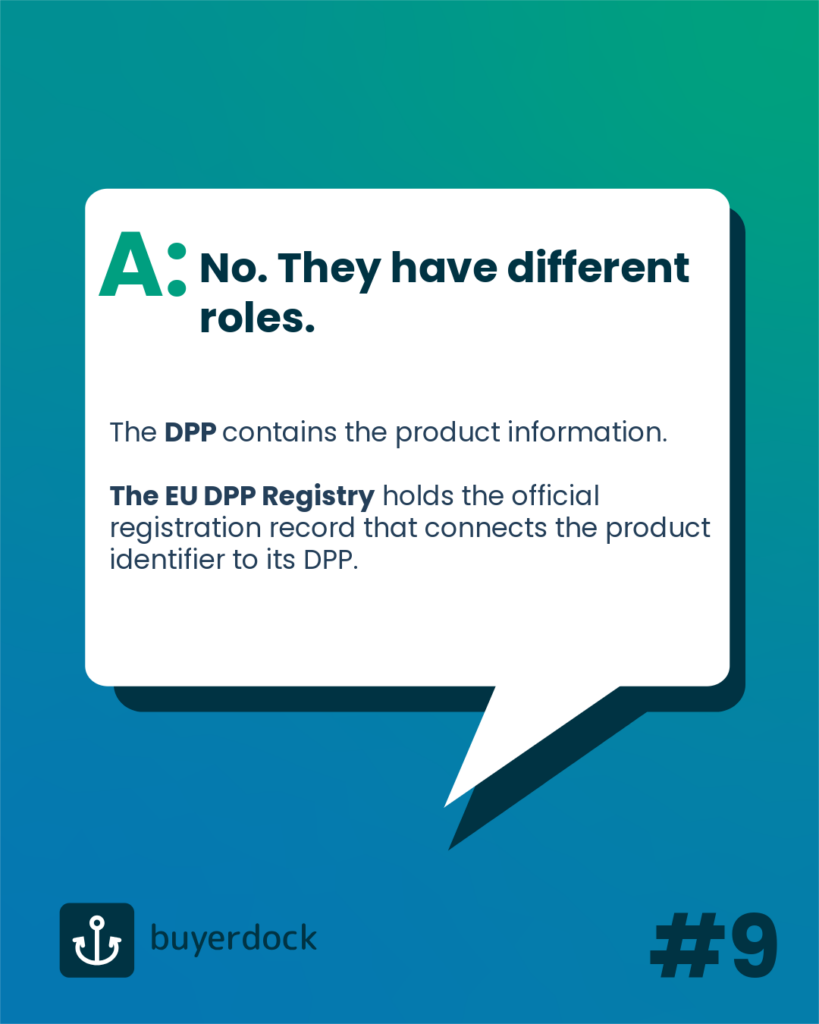
A Digital Product Passport (DPP) contains the product information connected to a product.
The EU DPP Registry holds the official registration record that links the product identifier to that passport.
A simple way to think about it is:
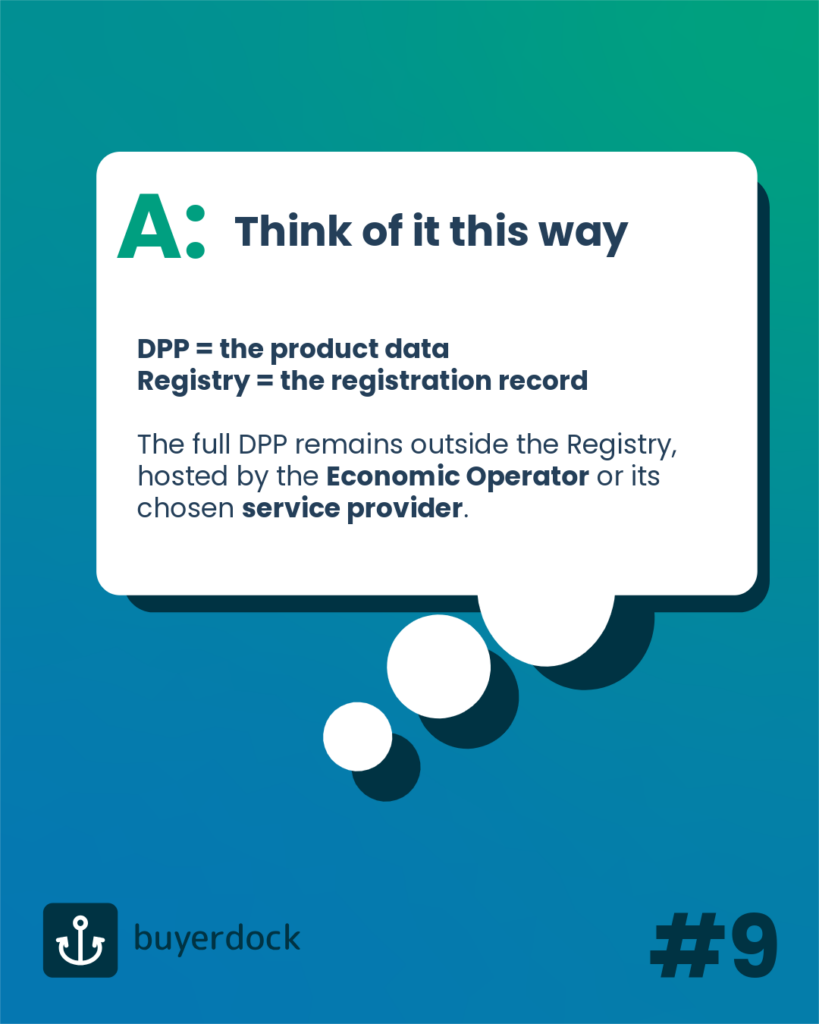
DPP = the product data
Registry = the registration record
Where does the DPP data live?
The full DPP does not sit inside the Registry.
The EU system is being built around a decentralised model, which means the passport data remains outside the central Registry and can be hosted by the Economic Operator or a service provider they choose. The Economic Operator remains responsible for the product information itself.
That is an important distinction for brands.
The Registry gives the DPP an official registration layer, but brands still need the product data and digital infrastructure behind the passport.
How do the two work together?
The DPP makes product information accessible.
The Registry provides the common EU infrastructure around registration, identification and verification.
So while they work together, they do different jobs.
The DPP is where the product information lives.
The Registry is where that passport is formally registered.
The takeaway
The DPP and the EU DPP Registry are connected, but they are not interchangeable.
One delivers the product information.
The other provides the official registration layer around it.
For brands preparing for DPP, understanding that distinction is a useful first step.
Explore how Buyerdock is helping brands prepare for Digital Product Passports.